By AcreGuard · Pre-launch field automation system · Africa-focused agro IoT
Operate remote African farms from drone scan to automated field action
Pilot announcements opening Q3 2026 · Stay tuned
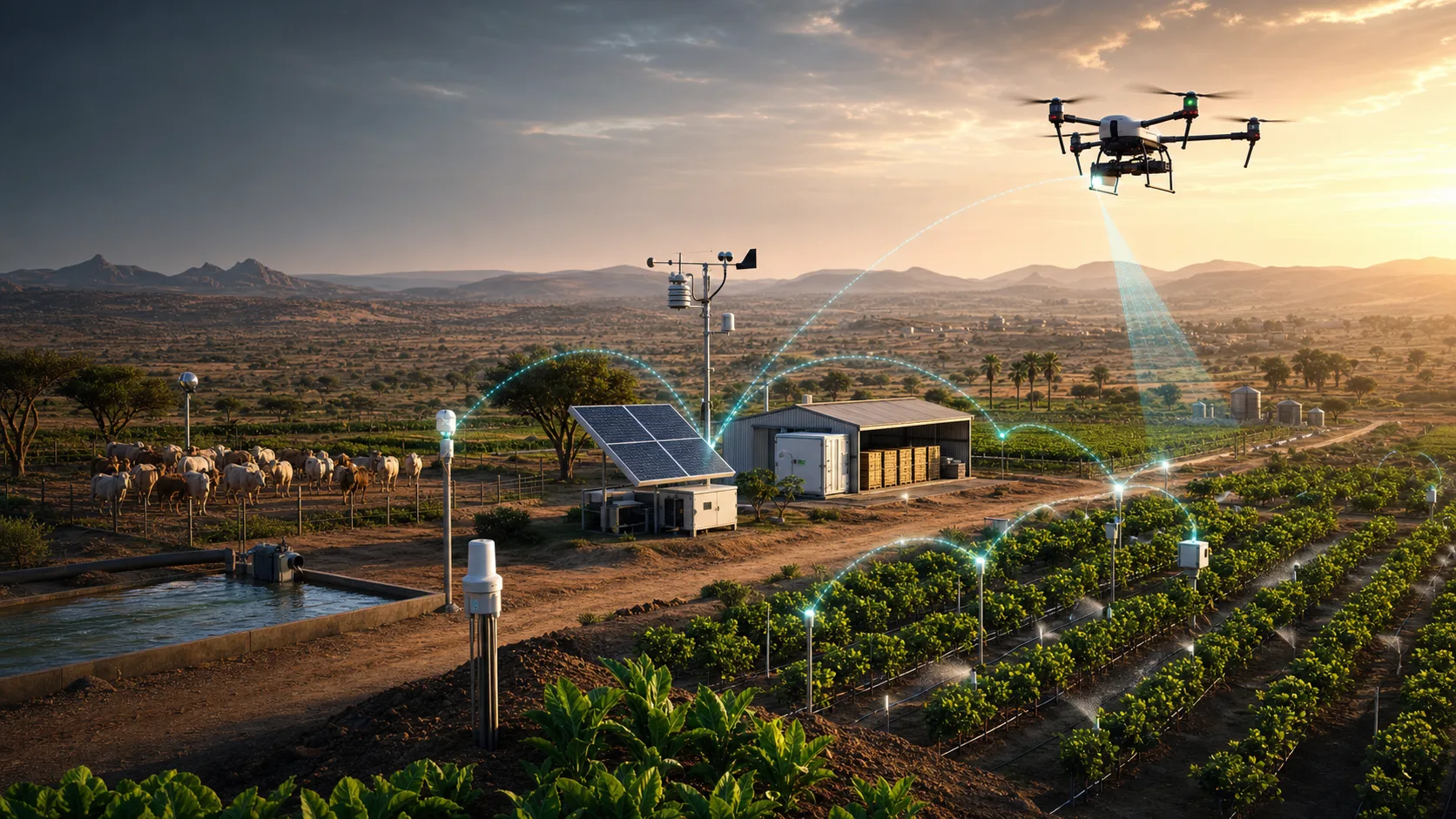
A field-ready AI agriculture operating system that connects drones, sensors, edge gateways, and automated control for weak-network farms.
DroneEdge AIIoT mesh
African Field Operations Challenge
Built for water, soil, livestock, storage, and weak-network operations
The platform connects field evidence, local sensing, and automatic control into practical operating loops for distributed agricultural projects.
Deployment Blueprint
One operating chain from field evidence to approved action
The platform connects drone routes, field sensors, local inference, approval boundaries, and execution nodes before cloud reporting catches up.
Field Deployment Package
What a first field deployment includes
The first engagement maps the field reality before hardware is proposed: water-control points, drone routes, weak-network coverage, local approvals, and measurable outputs.
Site survey
Map water sources, crop blocks, pump and valve points, signal coverage, maintenance routes, and solar power options before proposing hardware.
- Water-control map
- Signal coverage notes
- Power and maintenance plan
Starter deployment kit
Deploy the first automation loop with a drone route plan, edge gateway, water-control node, soil/weather starter sensors, and local queue setup.
- Drone route
- Edge gateway
- Valve/pump control node
30-60 day operating window
Run baseline observation, controlled actions, human approval boundaries, and weak-network reporting through one operating season window.
- Baseline week
- Approval rules
- Offline sync report
Deployment outputs
Close the first deployment window with a water report, risk map, audit log, operating-economics review, and Phase 2 expansion plan.
- Water report
- Risk map
- Economics review
Pilot announcements opening Q3 2026 · Stay tuned
Africa Field Readiness
Built for weak-network farms before the cloud is perfect
The deployment model assumes remote fields, intermittent connectivity, solar constraints, field maintenance routes, and human approval boundaries from day one.
What this page helps operators evaluate
AI agriculture operations answer block
This page helps operators evaluate an Africa-focused agro-IoT platform that connects drone evidence, field sensors, edge AI, and approved field automation under weak-network conditions.
Weak-network field automation
The platform is positioned for remote farms where field work must continue locally when cloud connectivity is intermittent.
Drone-to-field action chain
Drone scans, field telemetry, local inference, approval boundaries, and control nodes are described as one auditable workflow chain.
Water control before wider modules
Water is presented as the first deployable loop, with the same architecture able to absorb soil, weather, crop health, storage, livestock, and traceability signals.
Content brief expansion
Expanded answers for AI drone agriculture and field automation
These expanded answers make the homepage more explicit for searches around AI drone agriculture Africa, agricultural IoT platform Africa, and field automation Africa while keeping the copy tied to architecture and workflow fit.
AI drone agriculture Africa
AcreGuard describes AI drone agriculture in Africa as a field workflow where drone scans become structured evidence for local analysis, operator checks, and controlled action planning.
The page connects drone routes, sensor readings, edge gateways, and approval boundaries so searchers can see the operating chain without needing proof language that is not yet public.
Agricultural IoT platform Africa
The agricultural IoT platform message focuses on weak-network farms that need field sensors, LoRaWAN-style connectivity, edge queues, and cloud sync to work as one system.
AcreGuard frames the platform around modular telemetry, local command nodes, and canonical internal routes for crop protection, irrigation, system architecture, and market-specific pages.
Field automation Africa
Field automation in Africa is presented as an approved action loop, not an unattended promise: local systems can prepare control decisions while operators keep the final action auditable.
The visible workflow explains drone evidence, sensor thresholds, edge inference, approval checkpoints, and controlled irrigation or treatment paths for remote agricultural operations.
Search questions this section answers
How should AcreGuard explain AI drone agriculture Africa?
AcreGuard explains AI drone agriculture Africa through a conservative field workflow: the field signal, weak-network constraint, local decision path, operator approval, and canonical links to related pages. The answer keeps architecture, controls, and audit records visible before stronger evidence is published.
How should AcreGuard explain agricultural IoT platform Africa?
AcreGuard explains agricultural IoT platform Africa through a conservative field workflow: the field signal, weak-network constraint, local decision path, operator approval, and canonical links to related pages. The answer keeps architecture, controls, and audit records visible before stronger evidence is published.
How should AcreGuard explain field automation Africa?
AcreGuard explains field automation Africa through a conservative field workflow: the field signal, weak-network constraint, local decision path, operator approval, and canonical links to related pages. The answer keeps architecture, controls, and audit records visible before stronger evidence is published.
Related crawl paths
- AcreGuard Crop Protection OScrop protection AI Africa, pest detection drone, precision spraying Africa
- Edge AI Agriculture System Architectureedge AI agriculture, LoRaWAN agriculture Africa, offline farm automation
- AI Irrigation Control for Weak-Network African FarmsAI irrigation control Africa, drone irrigation management Africa, smart water control African farms
- Drone Pest Detection and Crop Scouting Workflows for Africadrone pest detection Africa, AI crop scouting Africa, targeted crop treatment Africa
- Edge AI Farm Automation Architecture for Africaedge AI farm automation Africa, weak network agriculture automation, offline farm command system
- LoRaWAN Farm Sensor Networks for African AgricultureLoRaWAN farm sensors Africa, agricultural IoT connectivity Africa, low power farm sensor network
Topic routes
Explore field automation routes
Focused pages connect the platform overview to specific water, scouting, architecture, and market searches.
Product
Crop protection and field operations pages.
Use cases
Operating loops for water, scouting, and field action.
Architecture
Edge AI, LoRaWAN, gateways, queues, and weak-network control.
Markets
Country and crop-specific routes for African agriculture searches.
Deployment Modules
Deployment modules beyond the first water loop
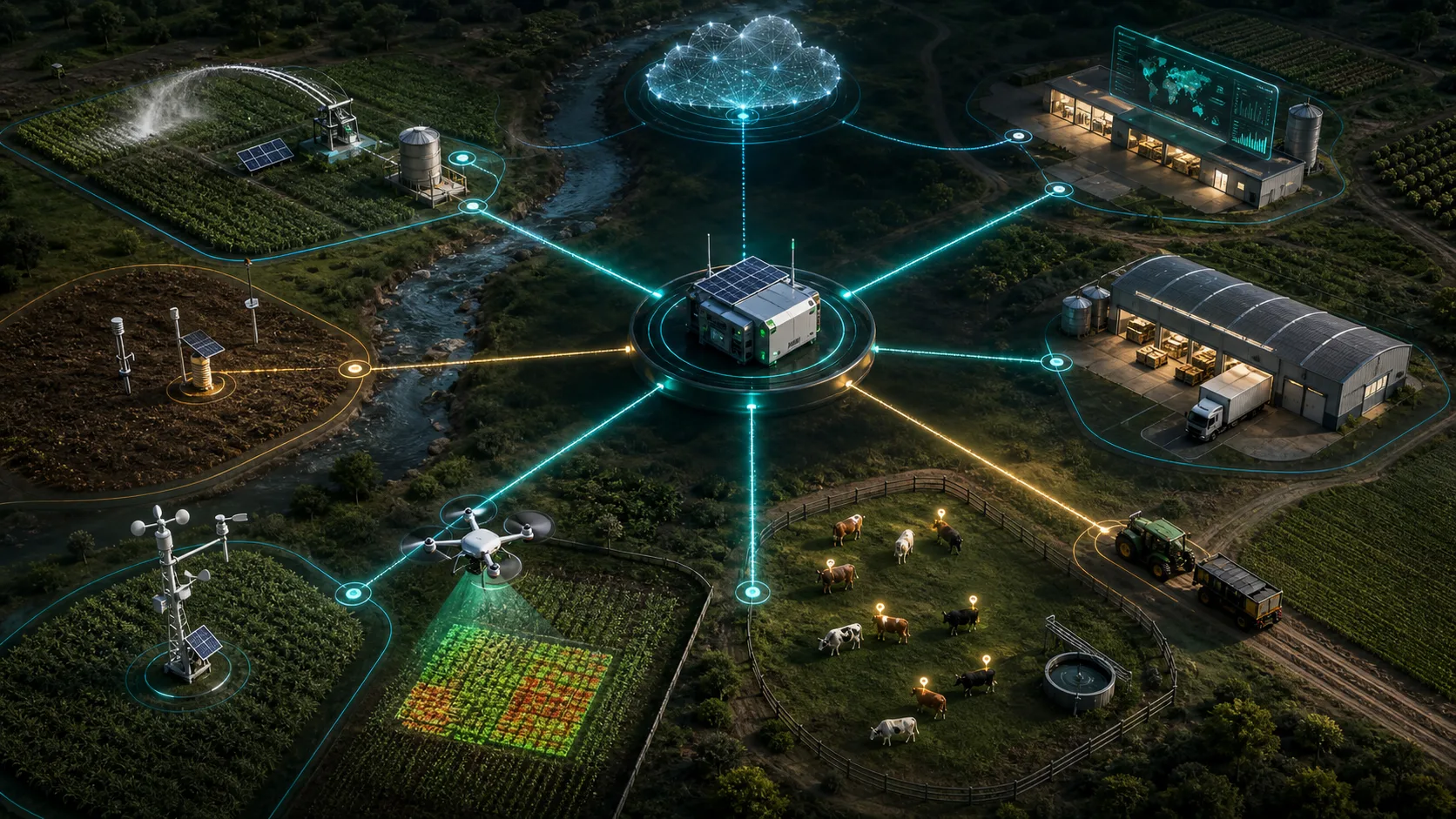
Water is the first deployable loop. The same architecture can absorb soil, weather, crop health, livestock, assets, storage, and traceability data.
First Deployable Loop
First Deployable Loop: Water
The same platform architecture starts with the clearest validation loop: drone evidence, AI prescription, field control, and verification.
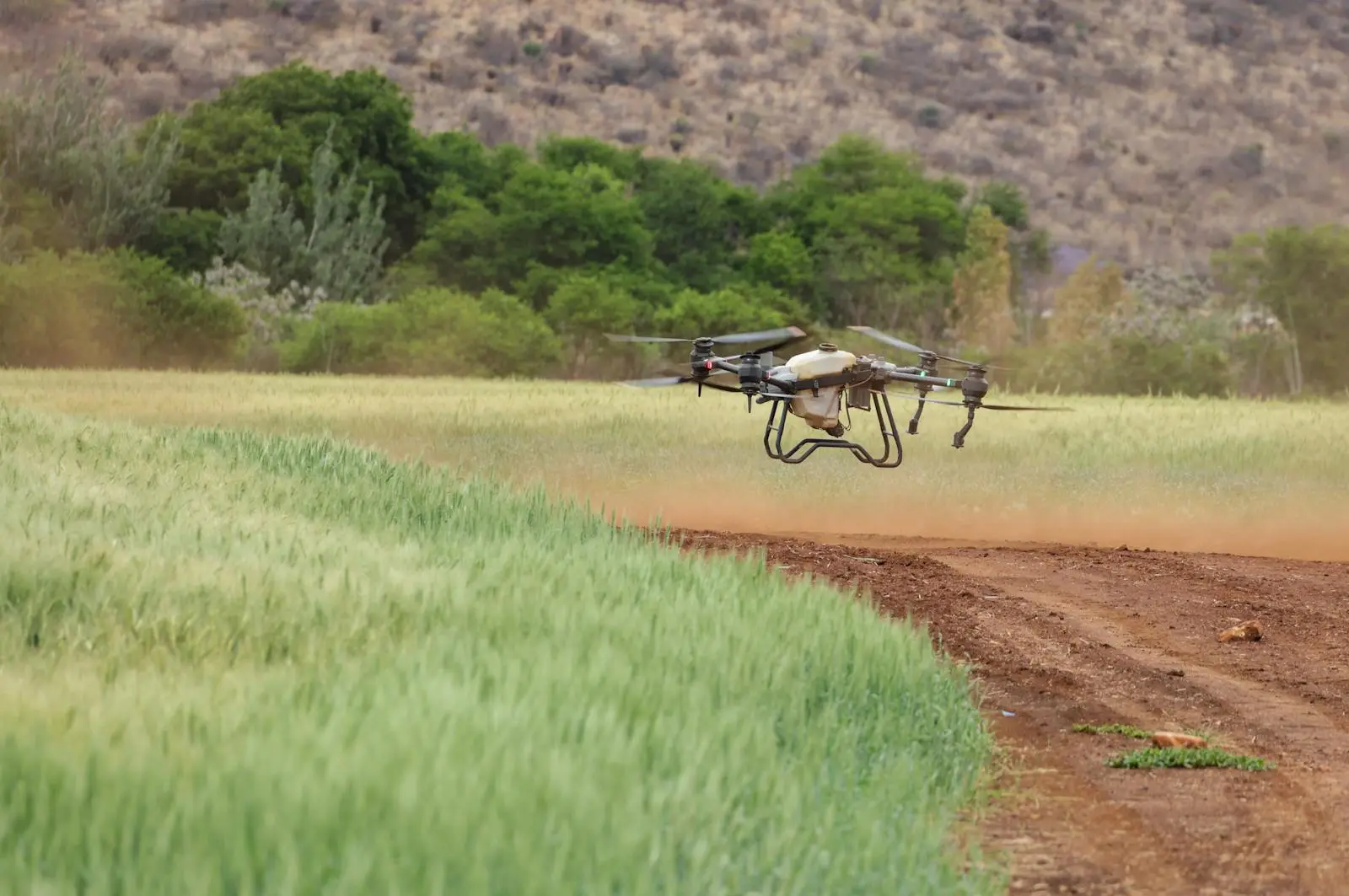
Active stage: Drone Sense
Drone passes capture thermal, NDVI, and soil-moisture evidence across the target crop block.
Execution Module Demo
One deployable module: water control
This console stays focused on water because it is the clearest first automation wedge, while the platform architecture can absorb other IoT domains.
Try one operating loop: diagnose the crop stress, select a valve zone, and confirm the field command.
Field Console
Block A3 water-stress priority
Drone pass confirms canopy heat and low soil-moisture confidence in the west row. The AI action package recommends controlled irrigation before midday evapotranspiration peaks.
Active loop stageCurrent: Drone Sense
Confidence86%Pressure target260 kPa
- Valve response
- Valve response: < 30s when online
- Weak-net mode
- Offline sync: store locally, sync when network returns
AI Findings
- Water-stress confidence: 86%
- Target zone: north-west crop block
- Recommended duration: 40 minutes
Control Action
Open Zone A valvePressure target: 260 kPaApproval: automatic valve, human pump confirmation- 01
Scan complete
- 02
Water-stress zone detected
- 03
Prescription generated
- 04
Valve opened
- 05
Pump confirmation requested
- 06
Reflight scheduled
- 07
Report archived
Design Impact Targets
Operational targets that can be measured in-field
The first deployment is designed to prove water savings, inspection reduction, earlier stress detection, and device endurance.
Design Targets
Irrigation water reduction target
Fertilizer optimization target
Earlier pest and water-stress detection
Livestock and asset visibility
Post-harvest loss reduction target
Audit-ready command records
Field Evidence (pending field deployment)
- Pre-deployment site survey — Nairobi basin water-control block
- Drone baseline flight plan in preparation — 240 ha maize sector
- Edge gateway + valve node deployment kit in development
- Measurement framework defined: water use, stress events, audit logs
Baseline week
Measure current water use, drone findings, network reliability, and manual inspection effort before automation.
Field operation window
Track prescriptions, approvals, valve actions, pump escalations, and local queue behavior during the active deployment window.
Post-action drone verification
Use follow-up drone passes to verify field response and compare stress recovery against the baseline.
Audit-ready report
Package command logs, telemetry, evidence images, and operating-economics notes for the farm, cooperative, or project owner.
Governance
Authorization levels keep field automation auditable
The platform separates observation, recommendation, assisted control, and autonomous execution so each farm can match automation to policy and field risk.
Flight approval and geofencing
Mission planning records approval status and keeps drone routes inside approved operating zones.
No-fly awareness
Restricted zones are treated as hard boundaries before a mission is released.
Data anonymization
People, vehicles, and sensitive assets can be blurred or excluded before reporting.
AI confidence thresholds
Low-confidence findings enter a manual review queue instead of triggering automatic field action.
Human-in-the-loop control
Low-risk valves can execute automatically, while pump and pressure changes require operator confirmation.
Audit logs for every command
Every recommendation, approval, valve command, and fallback event is recorded for project review.
Offline / weak-network fallback
Critical actions run locally; reports and telemetry sync when the network returns.
Pre-launch Assessment
Request an early field assessment
We map your crop blocks, connectivity, water-control points, and first automation loop before deployment begins.
Water + drone + valve control
A measurable closed loop: detect water stress, prescribe action, and control field devices.
Soil + weather + crop health
Add field context so decisions optimize water, fertilizer, climate risk, and pest response together.
Livestock + storage + traceability
Extend from production operations into asset protection, post-harvest quality, and project reporting.
Pilot announcements opening Q3 2026 · Stay tuned